 Skip to content
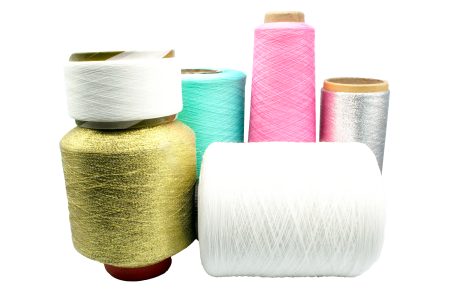
With the continuous advancement of textile production technology, more and more new fibers have become raw materials for textiles, which has brought about the problem of identifying fibers for textiles. Commonly used fiber identification methods include microscopic observation, combustion, reagent coloration, dyeing, and dissolution.

With the continuous advancement of textile production technology, more and more new fibers have become raw materials for textiles, which has brought about the problem of identifying fibers for textiles. Commonly used fiber identification methods include microscopic observation, combustion, reagent coloration, dyeing, and dissolution.
As a textile company with more than 15 years of R&D and production experience, we will simply popularize the following knowledge to you:
Professional in the textile industry
1. Microscope observation method
Make longitudinal slices and cross-sectional slices of the fibers, observe longitudinal and transverse morphology of the fibers under a microscope, and identify the fibers base on the difference in morphological characteristics, as shown in Table 1.
Table 1 Morphological characteristics of various fibers:
| Fiber type | Vertical form | Cross-sectional shape |
| Tencel fiber | Smooth | More regular round or oval, with a core layer |
| Modal fiber | 1-2 grooves in the longitudinal direction | Irregular similar to round waist, smoother, with leather core |
| Soybean fiber | Irregular grooves and island-like bumps on the surface | Flat dumbbell-shaped and round waist |
| Bamboo fiber | Grooves on the surface | Zigzag type, with core layer |
| Chitin Fiber | Obvious grooves on the surface | Zigzag edge, with obvious small gaps in the core layer |
| Viscose fiber | Grooves on the surface | Zigzag type, with core layer |
| Cotton fiber | Natural twist | Round waist with middle cavity |
| Silk | Smooth surface | Irregular triangle |
| Wool fiber | Scaly surface | Round shape |
| Polyester fiber | Stick shape on the surface | Smooth surface round |
2. Combustion method
Different fibers have different flames, smoke, odors, residues, etc. during the combustion process. Therefore, the types of fibers can be distinguished according to the characteristics of the fibers during and after combustion, as shown in Table 2.
Table 2 Characteristics of various fibers during and after combustion:
| Fiber type | Close to the flame | In the flame | Leave the flame | Burning smell | Residue form |
| Tencel fiber | Does not melt or shrink | Burning quickly | Keep burning | Burnt paper flavor | Gray-black residue |
| Modal fiber | Does not melt or shrink | Burning does not melt with black smoke | Keep burning | Burnt paper flavor | Gray-black residue |
| Soybean fiber | Shrink | Burning quickly | Not easy to fire spread | Singeing flavor | Crunchy black ash residue |
| Bamboo fiber | Does not melt or shrink | Burning quickly | Keep burning | Burnt paper flavor | Gray-black residue |
| Chitin Fiber | Does not melt or shrink | Burning quickly | Keep burning | Burnt paper flavor | Gray-black residue |
| Viscose fiber | Does not melt or shrink | Burning quickly | Keep burning | Burnt paper flavor | A small amount of off-white ash |
| Cotton fiber | Does not melt or shrink | Burning quickly | Keep burning | Burnt paper flavor | A small amount of off-white ash |
| Silk | Shrink | Burning quickly | Not easy to fire spread | Singeing flavor | Crunchy black ash residue |
| Wool fiber | Shrink | Burning quickly | Not easy to fire spread | Singeing flavor | Crunchy black ash residue |
| Polyester fiber | Melt and shrink | Melt then burn with solution dripping | Easy to fire spread | Special aroma | Glassy dark brown hard ball |
3. Reagent color method
Due to the different structures of various fibers, they have different coloring reactions to iodine and potassium iodide solutions. The fiber can be identified by observing the color and swelling of the fiber after the action of the reagent. This identification is only applicable to white fibers, and colored fibers can only be tested after fading. Reagent preparation: Dissolves 20g of iodine in 100ml of saturated potassium iodide solution, mixes thoroughly and then immerse the fiber for 1 minute,after washing then judge it by its color, as shown in Table 3.
Table 3 The coloring reaction of various fiber burning to iodine solution:
| Fiber type | Tencel fiber | Modal fiber | Soybean fiber | Bamboo fiber | Chitin Fiber |
| Color development with iodine solution | Black blue cyan | Blue gray | Brownness | Blue gray | Black |
| Fiber type | Viscose fiber | Cotton fiber | Silk | Wool fiber | Polyester fiber |
| Color development with iodine solution | Black blue cyan | Not stained | Light yellow | Light yellow | Not stained |
4. Dyeing method
For the dyeing method to identify fibers, which one is mainly based on the difference in color reaction of various fibers to dyes. Here are two dyeing methods, one is cold dyeing and the other is boiling dyeing. And the formula of the dyeing method, as shown in Table 4.
Table 4 Dyeing formula:


